What does resin flooring cost per square metre?
Real UK resin and epoxy flooring prices per square metre, why prep is the number that catches people out, and what to budget.


Published 20 May 2026 · Last updated 12 July 2026 · Written and fact-checked by Paul Whitmore, Lead Reviewer · Reviewed against our published judging process
In the UK, resin flooring typically costs £20 to £60 per m² for a basic coating, £60 to £130 per m² for epoxy, and £70 to £150 per m² for polyurethane, with fast-cure PMMA at £80 to £160. Add £5 to £20 per m² for floor preparation on top, because no honest quote leaves that out.
Those are real, current UK ranges, not sticker prices. What you actually pay depends on the state of your slab, the size of the area and how hard the floor is going to be worked. Let me walk you through it like I would on a site visit.
What resin flooring costs by type
Different resins, different money. The published UK cost guides and our own quotes line up pretty closely here, so these figures are a fair place to start.
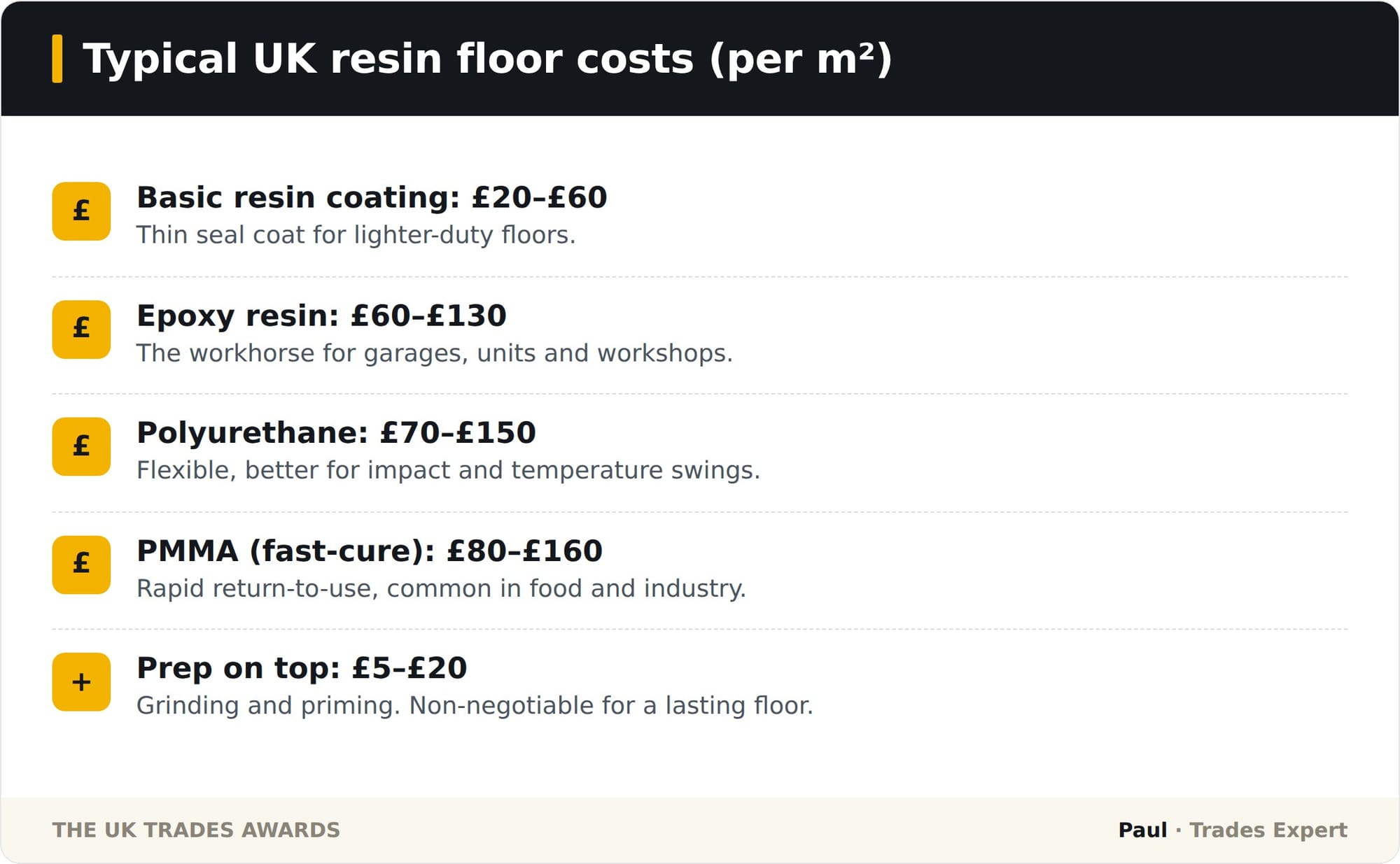
A basic resin seal coat is the cheap end at £20 to £60 per m², and it suits lighter-duty floors that just need sealing and protecting. Epoxy is the workhorse at £60 to £130 per m² and covers most garages, units and workshops. Polyurethane runs a bit dearer at £70 to £150 per m² because it flexes and copes with impact and temperature swings that would crack epoxy. PMMA sits at the top, £80 to £160 per m², and you pay for the speed rather than the looks.
Why prep is the number that catches people out
Here is where the cheap quote and the good quote part ways. Preparation, the grinding and priming that happens before a drop of resin goes down, adds roughly £5 to £20 per m². When somebody undercuts everyone else by a mile, nine times out of ten it is the prep they have quietly deleted.
Skipping prep is not a saving, it is a delay on your bill. The floor goes down lovely, looks the part for a few months, then lifts because it never bonded to the slab properly. Now you are paying to grind off a failed floor and lay a new one, which is the whole job twice.
From the tools: I once got called to a unit where the owner had taken a quote that was about forty percent cheaper than mine. Six months on, the epoxy was flaking off in sheets you could pick up like crisps. The cut-price crew had rollered straight onto a sealed, shiny slab with no grinding at all. Stripping their floor and doing it properly cost him more than if he had just paid the fair price the first time. Cheap prep is the most expensive line on any flooring job.
What else moves the price
Size works in your favour. A big open warehouse floor costs less per square metre than a small awkward one, because the setup and mobilisation get spread over more area. Access matters too, so night or weekend work to keep your business running will carry a premium. And the worse the condition of the existing slab, the more repair and preparation it needs before the resin stage even begins.
So what should you actually budget?
For a straightforward commercial epoxy floor on a sound slab, budgeting somewhere around £100 per m² all in, prep included, will not leave you far off for planning. Get firm quotes for your exact floor, and make sure every one of them spells out the preparation as a line you can see. If it is not written down, assume it is not happening.
One more thing before you commit. Factor in the downtime, because a floor that is cheaper to lay but takes a week to cure might cost you more in lost trading than a pricier fast-cure system. Our guide to how long epoxy flooring takes to cure lays that out, and it is worth reading before you sign anything. Match the system to the room first with epoxy vs polyurethane, then get quotes from the best resin flooring contractors in the UK.
Paul has spent more than twenty years around industrial flooring and writes practical trade guides for The UK Trades Awards.

Paul Whitmore, Lead Reviewer. Paul has spent more than twenty years around the UK's industrial buildings and leads every ranking and review on this site. Read his full profile.